Here Comes Another One: Mailbox Problem Identified Email Scam

What Is the 'Mailbox Problem Identified' Email Scam?
The 'Mailbox Problem Identified' email scam is a phishing attempt disguised as a legitimate notification from an email service provider. Cybercriminals use this scam to trick recipients into providing their email login credentials by redirecting them to a fake login page. These deceptive emails should be ignored to prevent security risks.
How This Scam Works
The fraudulent email falsely claims that an issue has been detected with the recipient's email account and urges them to log in immediately to resolve it. A prominent "LOGIN NOW" button or link is included in the message, which redirects to a fake website, mimicking the recipient's actual email provider.
For example, if the potential victim uses Gmail, the fraudulent page will be designed to closely resemble the real Gmail login page. The goal is to steal login details, including email addresses and passwords. Once scammers obtain these credentials, they can misuse them in various ways, such as sending out further phishing emails, distributing spam, or launching malware attacks.
Here's what the fraudulent notification says:
Subject: XXXXXXX Mail Problem Resolved
MAILBOX PROBLEM IDENTIFIEDDear XXXXXXX,
An problem has been detected in your mailbox at XXXXXXX.
To maintain secure and uninterrupted communication, please log in promptly to address and fix the issue.LOGIN NOW
This is an automated mail alert from the email protection system of XXXXXXX .
Potential Risks of Falling for This Scam
If scammers can access an email account, they can extract additional personal information from stored emails, contacts, and linked accounts. They might also attempt to access other online services using the same login credentials, leading to financial fraud or identity theft.
Additionally, cybercriminals often sell stolen credentials on the dark web, increasing the likelihood of further security breaches. Therefore, it is essential for recipients to recognize and ignore such phishing attempts.
How Phishing Emails Trick Users
Phishing scams typically use urgent language to pressure recipients into taking immediate action. These emails may claim that an account is at risk, a service will be suspended, or a security update is required. As they create a sense of urgency, scammers increase the chances that users will click on fraudulent links without carefully evaluating the email's legitimacy.
Similar phishing email scams include "Update Your Domain Name System Security (DNSS)," "Hosting Space Limit Notification," and "Your Emails Will No Longer Be Delivered." These deceptive messages often use branding and formatting similar to real service providers to appear legitimate.
How Phishing Emails Can Lead to Malware Infections
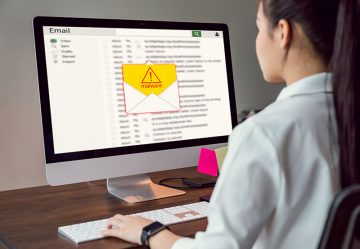
Phishing emails can also be used to distribute malware, aside from credential theft. Cybercriminals achieve this by including malicious attachments or links that initiate malware downloads. Some file types, such as PDFs, Microsoft Office documents, script files, and executables, may carry hidden threats that activate upon opening.
In some cases, phishing emails instruct users to enable macros in documents, allowing malware to execute on their systems. Clicking on malicious links can also redirect users to compromised websites that automatically download harmful software onto their devices.
How to Avoid Phishing Scams
To minimize the risk of falling for phishing scams like the 'Mailbox Problem Identified' email, users should follow these precautions:
- Be skeptical of unexpected emails – If an email claims there is an urgent issue with your account, verify it by logging in directly through your service provider's official website rather than clicking on embedded links.
- Check the sender's address – Scammers often use email addresses that look somewhat the same as the legitimate ones but contain small inconsistencies. Always verify the sender's email before taking any action.
- Look for red flags – Poor grammar, spelling mistakes, and generic greetings like "Dear User" are common indicators of phishing attempts.
- Hover over links before clicking – By doing so without clicking; you can preview the URL to determine whether it leads to a legitimate site or a suspicious domain.
- Enable two-factor authentication (2FA) – Adding an extra layer of security to email accounts helps prevent unauthorized access even if login credentials are stolen.
- Use reputable security software – Running regular scans with a trusted security tool can help detect and block phishing attempts.
Bottom Line
The 'Mailbox Problem Identified' email scam is a deceptive phishing attempt designed to steal users' email login credentials. By appearing as a legitimate notification from an email provider, scammers try to manipulate recipients into providing sensitive information. Understanding how these scams work and practicing safe online habits can help users protect themselves from falling victim to phishing attacks. Always verify unexpected emails, avoid clicking suspicious links, and enable other security measures to safeguard your email account.