Solid State Drive or Hard Drive: Pros and Cons
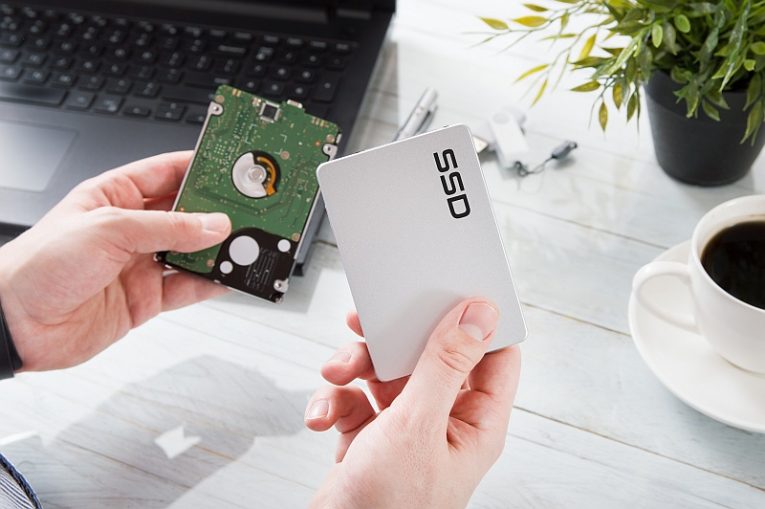
Even if you are not a business and don't have to worry for a large-scale network, even deciding on storage devices for your home PC can be a challenge.
In recent years, solid state drives or SSDs have made a lot of progress, prices have dropped significantly and SSDs have become a lot more accessible, prompting a lot of home users to consider getting one. This article will take a brief glance at the pros and cons of both types of drives and hopefully help you with your choice of new storage.
When choosing new storage for your home computer, you have to find the right balance for your budget and needs, balancing three separate core factors - price, storage space and speed. Every choice or reason to recommend one over the other will be a mix of those three factors and we cannot examine SSDs and hard disk drives (HDDs) in isolation, considering just one of the three. Here are a few points to go over and the pros and cons of each device, taking into account price, storage space and speed.
-
Table of Contents
Are you getting additional storage for large media files or a new system drive?
If you are considering a new main system drive on which your OS is located, there is no competition here. You can get accessible SSD drives that will deliver blistering loading speeds compared to HDDs and you will not be breaking the bank for one that is within the 500GB - 1TB ballpark.
In most general use, home computer scenarios, even a 500GB hard drive will be more than enough to use as your main system drive and the loading times for both your OS and all your apps installed on the same drive will improve dramatically, probably more than you imagine. In this scenario, an SSD is the clear winner.
If you are in need of large storage space for media that you will not be accessing very frequently, chances are you may be getting the best bang for your buck with a traditional HDD. You can get a 4TB HDD for prices that are approximately the same as the price of just a 500GB SSD. It's not hard to do the math here. You will not be feeling much of a difference in speed if you're keeping video files on the HDD either.
-
Do you plan to play a lot of modern games on your computer?
If you have a PC and you plan to play modern games on it, you may consider going all SSD, both or your system drive and for your storage drive used for games. The vast majority of modern games have been heavily optimized for loading off an SSD. You may see improvements in load times that are as extreme as a game going from 45 seconds loading times to under 10 seconds.
Of course, there is also the matter of size. Modern big-budget games also tend to take up upwards of 50-60 gigabytes of space, so you may want to go for at least a 1TB SSD drive for your gaming storage, if you can fit this within your budget.
-
Longevity and prolonged use
While theoretically a modern SSD should last longer than a HDD, this is only applicable in ideal conditions, where the SSD is not frequently under heavy read-write load. In more realistic conditions where your SSD will be used not just as a storage drive but files will be frequently accessed on it, it is not very reasonable to expect an SSD to outlive a traditional HDD by much.
The thing with modern-day devices is, the technology has reached a level where your storage devices are likely to outlive your motherboard and processor setup anyway. In this sense, longevity is not much of a deciding factor when picking storage devices and focus is more on finding your own golden ratio of price, space and speed.